

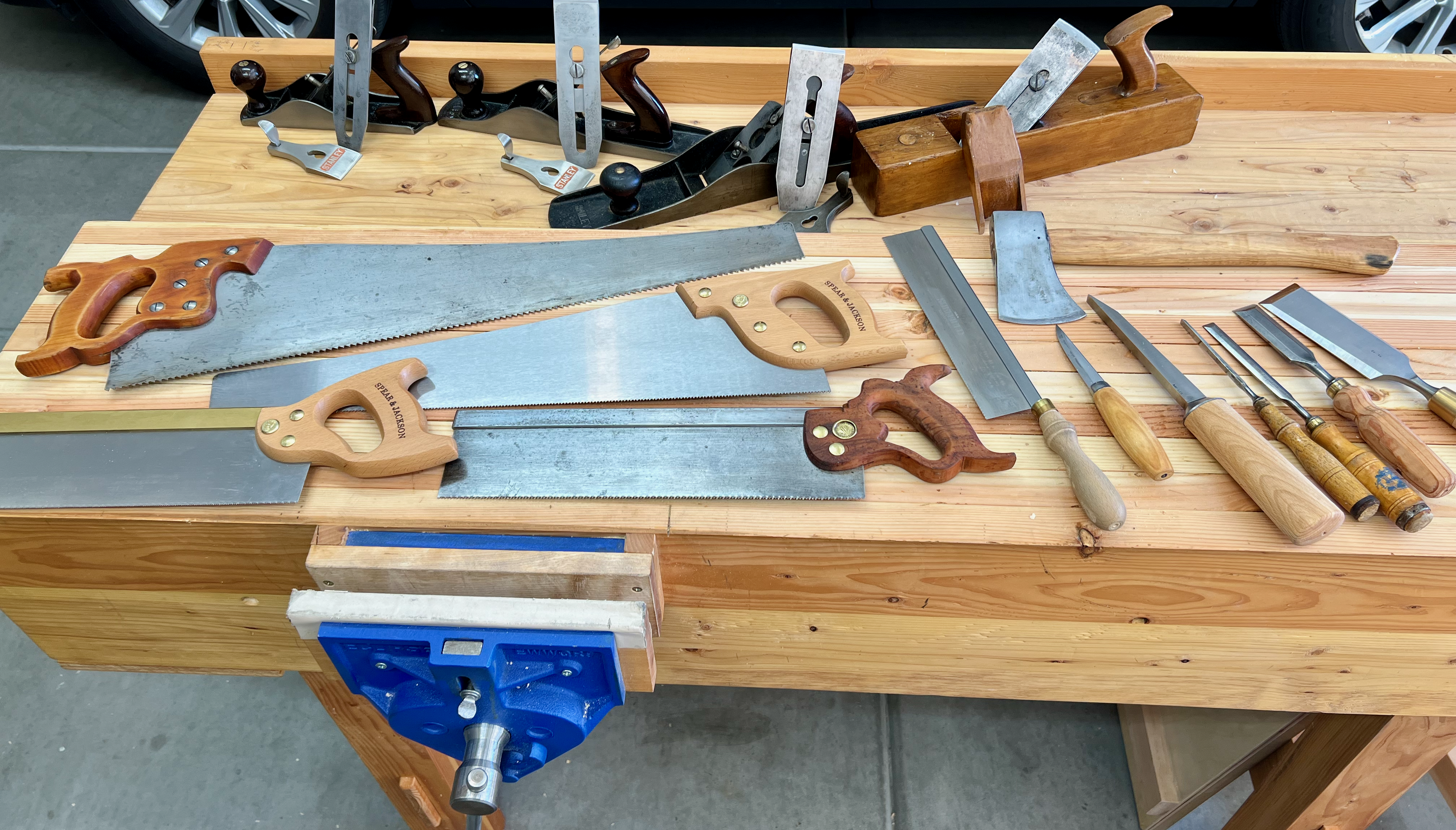
Thinking about getting started in hand tool woodworking? Thinking about working more hybrid with the joinery being hand done and the grunt work done by machines? Wondering what do you need and what do you need to know to get started down this path? This post was inspired by a friend asking for information about hand tool woodworking as they are considering shifting to more of a hand tool base, so I collected a lot of my research over the last few years and pared it down to what follows.
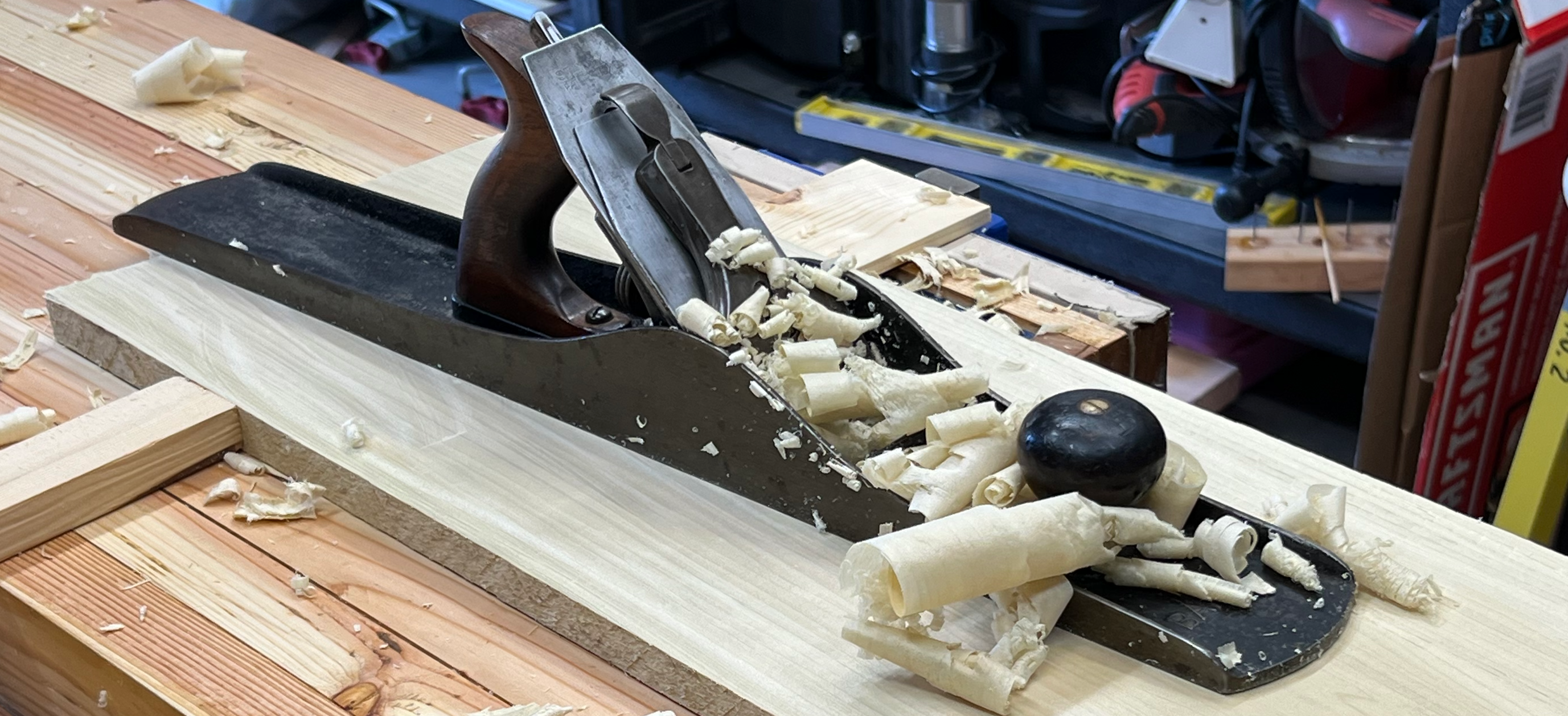
Where I am coming from
So you know where I am coming from and my biases, I’ll give a little background and maybe you can identify with some of these thoughts. I grew up watching This Old House which lead to Norm and the New Yankee Workshop (with little dabbles into watching Roy Underhill’s show, the Woodwright’s Shop). Norm had machines for everything! My first house in the 90’s needed a lot of work which lead to getting into woodworking in part of my garage to build simple furniture and cabinets. I acquired my first table saw, chop saw, and started down the path of routers, portable router tables, acquired a bench top joiner as well as a lovingly used planer. The small craftsman portable tablesaw eventually gave way (and consumed a tax refund) to a Powermatic tablesaw.
I’m a firm believer that cars should be parked in the garage, one of the most expensive assets one owns to be parked outside where in the suburbs bad actors can mess with it, and weather beats down on it. So that means my garage shop needs to be a small footprint, mobile, and able to reconfigure to accommodate the vehicles in their home. With power tools, that means moving the car(s) out, moving the tools out, setting up, then setting up for the cuts or work to be done… don’t forget about the rudimentary dust collection. It felt like 30 minutes to set-up the shop space and 30 or more to clean and tear down, to move back in the cars - every time you wanted to do some work. Even with only two cars in a three car garage, the single bay is unusable with large equipment that needs a car out and to be moved around for proper and safe usage. There has to be another way… I’m not a production cabinet shop, I’m a hobbyist doing custom one-off pieces for enjoyment, the craft, my mental and physical health and wellbeing. Seeing the layer of fine sawdust on everything in the garage did not give me confidence on the health side not to mention the table saw kickbacks, scary binding of the blade when using box store lumber, a planer kickback that seemed to have sprained my thumb. Not good… Not fun…
What has been fun has been down sizing. Learning the craft rather than learning machines. Fully experiencing the differences in wood, and what going with the grain, againts the grain, cross grain, and tear out truly mean. What truly sharp means, and how to obtain it. How a pinned mortise and tenon joint kicks ass over a pocket screw joint. How satisfying it is to make dovetail joints. How I can go out and woodwork at literally any hour without disturbing the neighborhood, and little to no set-up time. How fine toxic sawdust doesn’t fill the air but how cool wood shavings and chippings crunch under your feet, and sweep up nicely. How you can work with wood to get excellent results and perfection isn’t necessarily perfect dimensions and perfect surfaces on all sides. I recently completed the Mortise and Tenon Magazine 8-week Apprenticeship course and am more inspired than ever to stay on this path.
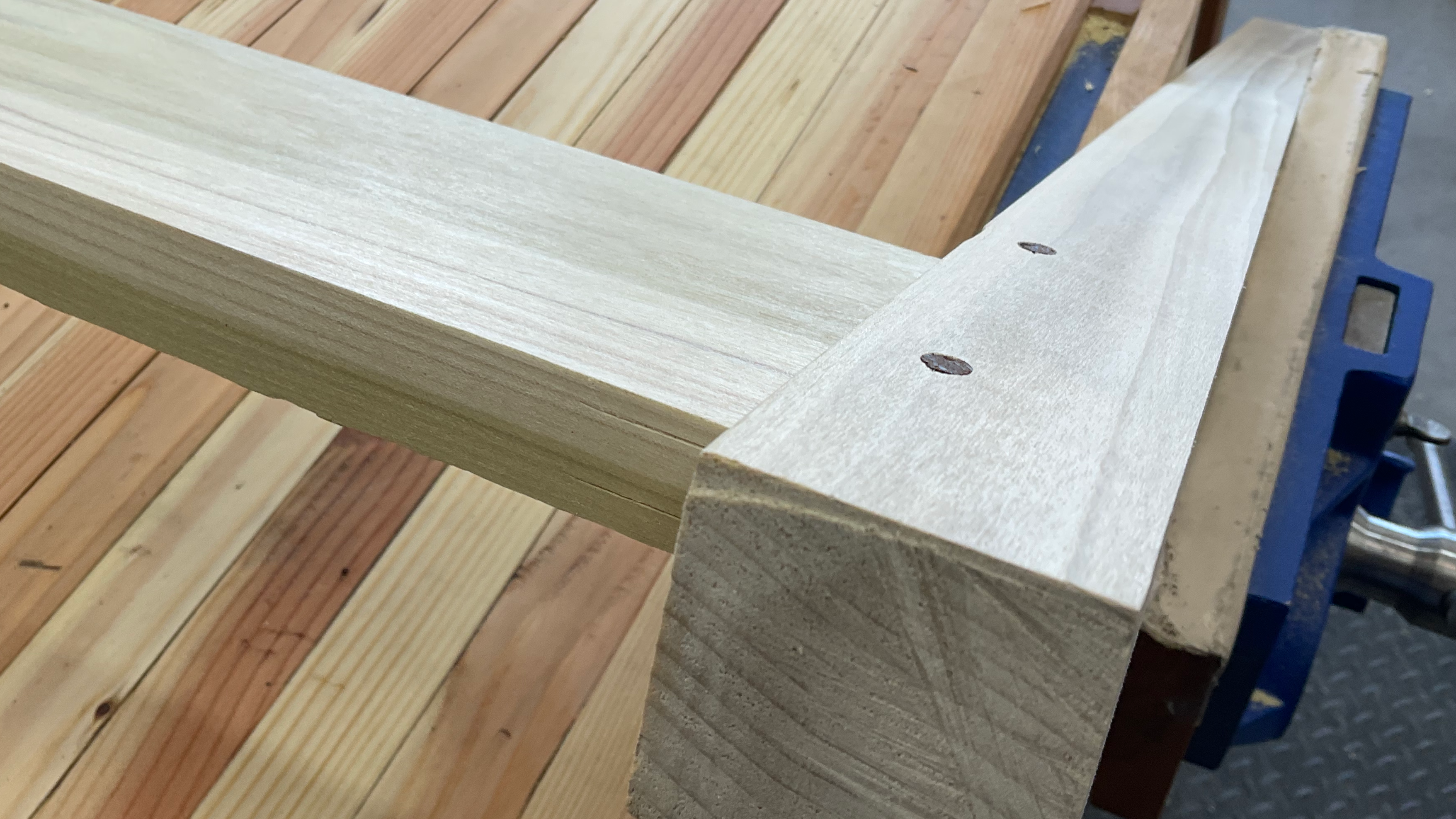
References and Resources for the Hand Tool Journey
Here is my list and links of resources that I found useful in my journey, and you may too…
Workbench
I’ll start with the bench I chose to build first - I feel safe experimenting with different devices (hold downs, planing stops…) and when I build a second bench (if I do) I’ll consider my learnings. This has been a great first bench, very solid, rugged, heavy - all good things.
- Paul Sellers building a workbench videos
- Paul Sellers blog on building a workbench
- Cut List PDF for workbench - you must be a subscriber, but I think it’s free. You just get on his mailing list (which is a good thing).
Other references
(and I’ll be building a low bench (roman) soon as a companion to the standing bench as well as my other saw bench)
- Lost Art Press: Workbench Tour number 1
- Lost Art Press: Workbench Tour number 3 - English Joiners
- Lost Art Press: Workbench Resources - Resources and links to other bench types. Links to Anarchist’s Workbench, the Roman Workbench - Ingenious Mechanicks, lots of resources, etc.
- Wood by Wright workbench playlist
- Rex Krueger - Which Workbench?
So many more resources, books, etc out there. I gravitated towards these resources and also building my own bench instead of buying a commercially produced bench. I don’t feel so bad beating on it, experimenting, etc.
Tools
- Paul Sellers - Exploring Hand Tool Woodworking
- Paul Sellers - Which tools to get
- Paul Sellers - My Essential Tools
- Renaissance Woodworker - Getting Started Handtool List
- Lost Art Press: The Tools You’ll Need
- Wood by Wright - Suggested Tools … and here’s a video version Basic Tools for a Hand tool Woodworking Shop
- Rex Krueger - My Essential Tools
- Sellers - Restoring a Bench Plane
- this blog – restoring chisels - Saving Marples
- my video on Restoring a Handsaw
Sharpening
This is such a personal preference when it comes to this and there are some very solid schools of thought. I am currently more on the Paul Sellers side of thinking and using diamond plates but with the technique I learned in the M&T Apprenticeship program.
- Using Paul Seller’s Sharpening System
- Making Paul Seller’s Sharpening System
- Paul Sellers: How to Sharpen a Saw
If nothing else, I think it’s a good place to start. But again, several schools of thought and everyone is passionate about how they do this. As long as you get consistent results and produce sharp tools that work - isn’t that what matters?
Publishers/Books/References
- Lost Art Press – So many great titles and timeless resources… Some have free PDFs or lost cost as well as in print. Some of my current favorites:
- Lost Art Press blog
- The Woodworker - 4 volumes
- Ingenious Mechanicks
- The Dutch Tool Chest
- Woodworkers Pocketbook
- Mechanick Exercises
- Make Fresh Milk Paint
- and the list goes on.. Have many PDFs from them as well (Anarchists… Tool Chest, Design Book)
- Moxon, Art of Joinery
- American Peasant
- Build a Chair from B**S
- Mouldings in Practice
- The Solution at Hand
- The Stick Chair book
- Go explore their site!
- Mortise and Tenon Magazine
- Joined Must have resource
- Worked
- Tools for Engagement
- …and more
- Paul Sellers Essential Woodworking Hand Tools
- Nick Engler’s Woodworking Wisdom
Training/Classes
- Mortise and Tenon Magazine - Apprenticeship Courses (Also includes a link to their 8-week apprenticeship course - highly recommended!)
- Google this topic for regional places doing classes and trainings
- See Wood by Wright and Rex Krueger for info on classes (You tube and websites)
- Lost Art Press highlights classes and offerings in their blog
- Southwest School of Woodworking